Pages

Showing posts with label Review. Show all posts

Jul 15, 2014

THE STRAIN S01E01 - REVIEW

Being a devoted TV fan, I have little respect for the acclaimed movie directors and generally I don't expect anything good from them turning to television. Making movies is very different from creating TV shows. With movies you just want to throw a couple of familiar faces in, some kind of a story about the potential end of the world (alien/supernatural invasion has worked perfectly for many-many years now) and a number of special effects, of course. Congratulations - you've got a movie! You don't need to pay much attention to your characters, the dialogues and so on. In fact, you have about fifteen minutes for the actors to deliver their condensed lines that would make even the stupidest viewer understand who's the hero, who's the nerd and who's the evil one. But in TV, if you do not have the characters that are thoroughly worked through, that are compelling and with plausible motivation for their actions - you have nothing.

All of this is an introduction to the review of del Toro's attempt to earn some easy money, the newest FX drama - The Strain. The first episode was directed and co-written by del Toro himself, so he's fully responsible for whatever I've seen so far. So, can an old dog learn new tricks? Well, not this one.


There is hardly any other creation out there that is further away from the saying "less is more" than this one. The series is full of every possible gimmick that drive the general public to the movie theaters. There is a virus threat, weird worms that try to infest humans, a creature with vampire-ish eating habits, some version of zombies or undead, evil corporate bastards that are not even really human, an old man with a sword; there are even freaking Nazis.


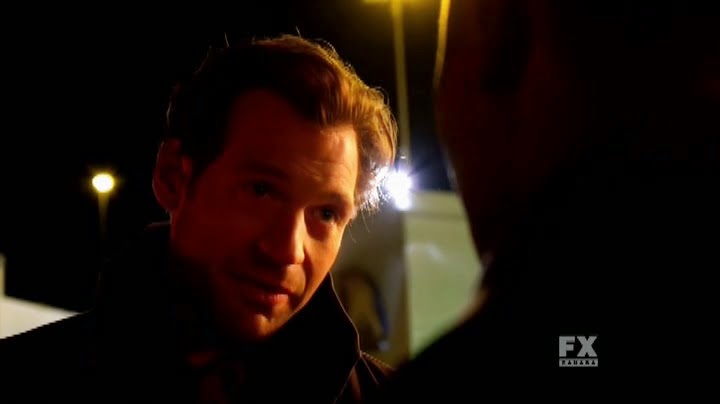
The main part of the head of CDC, Eph Goodweather (what kind of last name is that?), is played by Corey Stoll (you may remember him as the troubled congressman, who got killed in the first season of House of Cards, only now he has hair). Who is Mr. Goodweather? Surprise-surprise, he's a workaholic who is about to lose the custody of his son as his wife hates him for not being there and divorces him. He has a thing for his sexy, emotional and obviously smart (because she wears glasses) colleague Nora Martinez (Mia Maestro). It hasn't happened yet, but I understand that this couple will start killing undead creatures with swords in the near future.


Not only the characters are plain and boringly typical for the genre (by the way, haven't you got tired from these emotionally unattainable magnificent bastards? I know I have). The lines they say made me roll my eyes on numerous occasions. Just look at this monologue by Eph: 

You don't like terrorists? Try negotiating with a virus. A virus exists only to find a carrier and reproduce. That's all it does and it does it quickly. It has no political views, it has no religious beliefs, it has no cultural hangups, it has no respect for the badge, it has no concept of time or geography. It might as well be the Middle Ages, except for the convenience of hitching a ride on a metal tube flying from meal to meal to meal. That’s how a plague begins. So you still want to be the first one through the door?

Only I feel that this is excessive to prove a point?

Then there's this one by some evil rich man, who seems to like tag questions a lot:

You may notice how chilly it's gotten in here (...) but [it's] not too cold for you, I trust. Of course, It can't be too cold for you, can it? 

And:

Throughout my life, I've learnt what it feels to cross a line. To do things... the things that cannot be undone. That line - it has been crossed now, hasn't it? 


I literally laughed when the main evil creature escaped in a hilarious manner, waving with all its limbs! The thing that lives in the jar with water and looks like a stomach is also pretty funny. All of this could be a great parody on thrillers of that sort, the sad thing is that the creators a dead serious.


All in all, it seems like a more expensive Salem. No Fargo here, ladies and gentlemen, move along, there's a queue of boys and girls with popcorn, desperate to check this out.

Jun 11, 2014

MURDER IN THE FIRST - EPISODE 1 REVIEW

Created by Steven Boncho, the latest TNT crime drama Murder in the First seems to be a remake of his earlier production, Murder One. Like in Murder One, only one case is being solved throughout the entire season, however the newer show is telling the story through the point of view of the two inspectors investigating the crime, and not the lawyers defending the suspect(s). The series is set in San Francisco.


A great number of familiar faces stars in Murder in the First. The leads are Taye Diggs (Private Practice), playing the part of Terry English, and Kathleen Robertson (Kitty from Boss), portraying Hildy Mulligan. The role of the main suspect, Erich Blunt, an arrogant CEO of a tech company, ingeniously named APPLSN, is played by Tom Felton (Draco from Harry Porter), one of his lawyers is impersonated by James Cromwell (American Horror Story, Betrayal), Steven Weber (2 Broke Girls) acts as one of Blunt's private jet pilots, and so on.


Both of the leads have personal struggles to overcome. Hildy is going through a divorce (it is such a cliche to make her live the way a single guy would - not capable to make a proper breakfast for her daughter and not giving a damn about how messy her house is). Terry has a much more serious drama to deal with: his wife has stage four pancreatic cancer (I can't help but think they chose this specific type of cancer, because everyone knows about it, now that Steve Jobs died from it). Both of these issues seem to be unrelated to the homicides that they investigate, which isn't a good sign: if the murder case does not affect the main characters, what is the point of it, really? 

After all the nearly pornographic scenes Robertson had in Boss, her exposure of various parts of bare skin in Murder in the First seems almost innocent. However, the series can't let us live our lives without some proper nudity, therefore one of the victims, Cindy Strauss, just had to be murdered naked. I hope this will be treated as a clue, otherwise it'd be simply cheesy.


There is nothing unorthodox about how the story develops, the twists are typical for the genre. All what's happened so far implies that Felton's character is the murderer, which means it's safe to assume he has nothing to do with either of the homicides. My money is on the pilot.

All in all, it's just another cop drama, not the worst one, mainly thanks to the cast, but after the world has seen True Detective and Fargo, describing Murder in the First with any adjective other than "mediocre" would be too generous.

Jun 5, 2014

HALT AND CATCH FIRE EPISODE 1 REVIEW

The trending topics on TV this year are undoubtedly pirates and the tech guys. AMC has decided to unite the two by producing a show about the techies who steal somebody else's intellectual property in the darkness of a family man's garage.

The first episode of the new period drama Halt and Catch Fire has been released to the Internet some time in May and the official premiere date was set to the first of June. The show is created by Christopher Cantwell, the writer and producer of Vicariously, and Christopher C. Rogers; the showrunner is Jonathan Lisco. The series takes us back to the '80s, the beginning of personal computers revolution. It follows the story of a former IBM employee Joe MacMillan, who gathers a team of talented engineers - a depressed drunk named Gordon Clark, who once attempted to build a PC with his wife, and a smart but not-giving-a-damn student Cameron Howe. Together they attempt to build a machine, despite the challenge that other corporations that already conquered the market have to offer.


To explain the title, the show opens with the following definition: “HALT AND CATCH FIRE (HCF): An early computer command that sent the machine into a race condition, forcing all instructions to compete for superiority at once. Control of the computer could not be regained.”

So what can I say about this series. First of all, not only this is a period drama: this is so distinctly the AMC period drama. The resemblance with Mad Men is all over the place: ruthless corporate sharks in nice suits, excessive smoking, secretaries with impressive exterior - all of this is here. Halt and Catch Fire even has its own version of Don Draper, plaid by a young Nicolas Cage double, Lee Pace. And then the feel of the eighties is definitely recreated with attention to details.


Sadly, the feel and style is all that this show has to offer, as not only the developments of the story lack excitement, but it's also very hard to understand the point of everything the characters dream of. “Computers are not the thing — they are the thing that gets us to the thing,” says the main character - and yet, instead of using computers to actually get to the thing, whatever it is, he just decides to build one of his own. Yes, according to another character, Cameron, everybody's ripping off everybody in the industry - but why follow the pattern then? And finally, even in the unlikely event of success, how could stealing and possibly improving somebody else's product could affect the industry so that we would care about the outcome of whatever the characters are doing?


The series offers every possible cliche that any other computers' related movie has ever introduced, except for middle-aged virgins, maybe, on top of that it displays all the features of popular series we have already seen: complicated and highly unsympathetic male characters, rebellious youngsters, nagging wives, struggling middle class families, cruel corporations and so on. 

All in all, it is not completely unwatchable; those who feel nostalgic about the 1980's might find it amusing, and probably, so would geeks. However, if you don't get excited from watching green numbers running down the screen or seeing somebody play video arcade games while listening to the period music, this is hardly something worth waiting every week for. It's a "meh" sort of thing.

May 30, 2014

HANNIBAL SEASON 2 REVIEW

This review contains spoilers.

and falling headlong 
he burst open in the middle 
and all his entrails gushed out

Acts 1:18

So the second season of the only decent NBC's drama series has ended in a blood bath. I don't like this kind of cliffhangers, when you're left wondering, who, if anyone at all, lives. Make no mistake, I have no issues with the brutal massacre itself, it was actually very much in place; it's the fact that for several months we won't know, who is gone forever that annoys me. The scene in the plane is far more appropriate for the finale, and if the only mystery left was how these two ended up together and why, it would have suffice. Unfortunately, the creators of the show decided to go all-in, and that was the general feeling I got from the entire season.

I thought it was smart of them to gradually walk away from the procedural genre, though they still tried to shock the audience with very peculiar murders. The funniest episode was of course the one with the pig lord getting what he deserved. It amused me quite a bit.

It appeared to me that the psychiatrist-patient dialogues, which I really enjoyed last season, got a lot simpler, and one did not need to think to get the subtext. For example, I personally thought it was unnecessary to say "last supper" out loud in the final episode:  what this meal was to the main characters was clear from how the scene was set up.


The series has less respect (or regard?) for women than Silicon Valley. The only female character that shows any signs of free will is Du Maurier. Miriam, Alana, Beverly, Margot, Freddie, Abigail, Bella - all of them are merely the means to affect other men's behavior and feelings. They die and resurrect as easily as they burst into tears and start yelling. Hannibal explores the world of complicated men and plain and simple women.

Now closer to the plot. If the first season is dedicated almost solely to Will, the second one is definitely about Hannibal, whom we get to know mainly by watching Will change. 


What is Hannibal? Well, he tends to think he's God, so he acts like one. Turns out, killing people, as well as devouring human flesh and internal organs, is not his main focus. Surely, Hannibal enjoys the sacrifice, while comparing his actions to natural disasters, but despite all indications, he doesn't really live to eat. What is more interesting about him is that like God, who created man in his image, Hannibal is turning his patients into some versions of himself. Graham seems to be the first one whom he intended to keep, which means he thought of Will as of his finest creation, although surely not as divine: something like a human son. Only Du Maurier came as close before, which is why Hannibal liked having her around and tried to reveal himself to her, but she preferred to play blind, which was not ideal.

Dr. Lecter felt connection with Will from the moment he's heard his own profile done by Graham at the academy. This shaky brilliant man saw him, understood him, which meant it would have been so easy for him to become Hannibal. In this piece of raw material he saw his future creation. This weird bond, together with Lecter's sense of superiority to Will and his confidence in his own capability to change the guy, and turn him into someone he can reveal his true nature to, inadvertently got him too invested with Will's world and Will's attractions. Du Maurier was wrong about Hannibal; he was not aware of the FBI trap, and he was hurt by the untold truth, the way a psychopath can be hurt by failing to control another person. 


In the end Hannibal asked if Will thought he could change him, the way Hannibal changed Will, and Graham responded that he already did, which seemed to strike Dr. Lecter, as if he realized this statement was true. And the only way to put this all behind was to destroy Will and his world and those whom he loves - everything that reminds Hannibal of his vulnerability, his mistake, his ungodliness. Hannibal and Will were through for good. The cup had to remain broken, and so it did. 

May 7, 2014

PENNY DREADFUL - REVIEW

A penny dreadful was a type of British fiction publication in the 19th century that usually featured lurid serial stories appearing in parts over a number of weeks, each part costing one (old) penny. The term, however, soon came to encompass a variety of publications that featured cheap sensational fiction, such as story papers and booklet "libraries". The penny dreadfuls were printed on cheap pulp paper and were aimed primarily at working class adolescents.

So I have now watched the first episode of Penny Dreadful, which has been released to the Internet by Showtime weeks before the official premiere date. The premise is very simple: a bunch of scary literature characters are put to London, to the year 1891 (surely, the audience is already exhausted from Victorian London, but any other place and time would hardly work just as well). If American Horror Story citated various horror movies, Penny Dreadful is referring to English literature, although the creators of the latter seem to interpret the classical characters quite freely, for example, I felt some strong gay vibes between Dr. Frankenstein and his monster.


Many of the newer series are loosely based on well known books, characters or movies, like Hannibal, Once Upon A Time or Fargo, so I guess the idea of creating a weird fanfic about Dracula, Dorian Gray and Dr. Frankenstein was on the surface. 

Anyway, I have mixed feelings about this show, so I'll break my review into two parts.

Firstly, here are the things that I did like:

Visuals and audio. The series is very beautifully shot, the picture is mesmerizing at times, there don't seem to be any cheesy special effects, such as oozy substance coming out of trees, like in Salem. There is extreme amount of fake blood everywhere, of course, but that is to be expected. The soundtrack is also awesomely dark and intense, the music definitely suits whatever's on the screen and helps creating the proper mood.


It is actually quite scary. A great deal of tension is created by making you anticipate something bad happening long before it actually happens. Although only about 10-15% of the episode is devoted to frightening stuff, in the aftermath you do feel a little scared.

The acting. This is one of the series where the cast does save the day. Eva Green, who's playing one of the key roles - a psychic Vanessa Ives -  is definitely the star of Penny Dreadful, and on top of being absolutely gorgeous, she shows how one reveals great passion and suffering underneath the cold surface. Some of the other actors (the cast is predominantly male, of course) have enunciation issues, so I really had to listen carefully to what they were saying, but in general, all are strong, and they do get everything they can from the mediocre material.


Sex scenes, though surely present (otherwise Showtime wouldn't go for it, I gather), are not particularly graphic or overwhelming. The series wouldn't be any worse if they weren't there, but luckily, it doesn't suffer from them being present either, like some of the other TV shows.

Now about the things that I did not enjoy.

After having watched the first episode, I can say that Penny Dreadful has a hectic storyline, although, to be fair, it is a very widespread issue with pilots. It requires great deal of talent to properly introduce complicated characters and a mystery that would make the viewer want to watch the second episode within just one hour. So there's a good chance the narration might improve as the series goes along. However, the fact that they don't mention anything related to the actual plot on the official page of the show, makes me suspect that it is because they have nothing to say about it.


The dialogues that tend to turn into monologues are rather weak and sort of pathetical. Mainly they remind of the painful lines from cheap novels. This may be because the creators are going for resemblance with the penny dreadful genre, which requires long painful dialogues, although in this case I would prefer a bit more elegance in execution of this idea. 

I don't think I am going to watch this show, 'cause I'm not into scary movies in general and there's not much in it for me to compensate for all the time that needs to be spent on  looking away whenever something is about to jump out of darkness. But overall it is definitely a solid piece of work and I'm sure many people with brave hearts would actually find it very enjoyable, especially if they improve the plot.

Apr 28, 2014

BLACK BOX

Since the moment House has ended, every channel seemed to have been looking for a new hit medical drama with an extraordinary and superarrogant doctor to fill the void. Moreover, now that bipolar Carrie from Homeland  had such a great impact on the audience and TV critics (for no apparent reason, in my opinion), it would be strange if we would not see any new female characters with this condition. And so meet ABC's Catherine Black (Kelly Reilly) - a secretly bipolar neurologist, who weirdly enjoys her disorder. If Gregory House had problems as a result of his drug abuse, Catherine's issues begin when she is not taking the pills, which she seems to not do quite often. For her "normal" means "mediocre", even though she does not actually say it out loud. She enjoys her maniacal phase, she feels her condition makes her incredible, although judging by how she is portrayed, her extraordinariness is only in her head, just like the music she dances to during her breakdowns.


The title of the show, Black Box, refers to the mysterious human brain, the subject of Catherine's studies. Trivially, it also contains last name of the heroine. Unlike House, she experiences no epiphany, she just does her job relatively thoroughly, but nothing really gives away why would anyone call her "Marco Polo of the brain", which is, apparently, her nickname in the industry. Apart from family, only her psychiatrist, Dr. Helen Hartramph (Vanessa Redgrave) knows about her condition. Evidently, all her co-workers are idiots, as she manages to fool them for so many years, despite occasional dancing in the hospital stairwell.


Her personal life is definitely far from normal. She has an illegitimate daughter, adopted by her brother Josh (David Chisum) and his wife Regan (Laura Fraser). The girl doesn't know the truth, obviously, but adores her irresponsible "auntie". Catherine's relationship with her boyfriend/fiancee Will (David Ajala) is complicated, of course. To summarize her actions during the episode, she just torments him. Ms. Black seems to lean towards self-destruction despite the tragic example from her past: her own mother ended her life by walking into the ocean, with her pockets full of rocks, when her kids were very young.

All this Nashville style (typical for any ABC show, really) melodramatic bulls**t with multiple break ups, several instances of cheating and two suicide attempts, on top of painful dialogues, makes the series look cheap and soapy.

The idea of normality being the best state for any person is challenged by this show, though the arguments are not particularly compelling. And by the way, comparing your character with Hemingway, Van Gogh et cetera, is never a good move - her actions should prove her genius and her right to be arrogant, otherwise it's just laughable.

Apr 23, 2014

SALEM: IT'S GONNA BORE THE HELL OUT OF YOU

I must be honest, I did not expect much from WGN's first original TV series Salem in the first place. Yet, I could not possibly imagine, it would be that bad. Like most people, I've seen my fair share of trashy horror movies - all that garbage that earned less than half of its budget - but up to this point, there hardly was any series that would fill this niche on TV. In its tackiness Salem can only compete with some of the low budget Russian TV shows, and has a good chance of winning (if you've never seen Russian series, just take my word for it: the comparison with them is an insult).

Salem takes us back to the end of the XVII century, when all the infamous witch trials took place. In the center of this series are Mary Sibley (Janet Montgomery) and John Alden (Shane West), who are smart enough to become lovers in the society where non-marital romantic relationships are severely punished. Consequently, Mary becomes pregnant, but is forced to solve this problem on her own, as John gets conscripted to fight Indians, before she learns about her condition. So she decides to get rid of the baby by sacrificing her fetus to the devil (on that note, she seems quite far on, how could she hide it for so long?). 


When seven years later John returns, he finds his hometown engulfed in witch hunting hysteria, instigated by the loyal customer of the local brothel Cotton Mather, the preacher. And Mary is married to a rich old guy, who's immobilized by the stroke (also, she's a witch, which John is yet to find out).

Somehow, the show manages to portray the obvious lunacy of puritans and at the same time introduce the idea that they weren't really wrong about the necessity of the witch hunt. Apparently, those hypocrites' fault was not the killing and torture in itself, but their inability to detect correctly, who must have been killed and tortured. Call me narrow-minded, but this is an idiotic premise.

The plot progression, the dialogues, the special effects and the acting induce yawns; the scenes from various horror movies look ripped off, rather than cited; the series is full of cliches and shallow characters. From the first episode we have learned all witches' names, and can probably guess how the story will advance fairly accurately. The only question left unanswered is whether Mary has any useful or interesting magical powers. She doesn't seem to show any significant abilities except for limited mind control. All the other scenes where she performs her witchy stuff, seem to be put there just to expose her body.


Clearly, the creators did not intend it to come off funny, which makes it especially amusing. The only environment where this series could actually be enjoyed is in the company of drunk or stoned. There you could at least laugh at numerous failures of this show's script and its ridiculous special effects. But if you're in the mood to get scared, don't even bother, there's no way in hell Salem could help you with that.

Apr 16, 2014

FARGO - PILOT REVIEW - THE CROCODILE'S DILEMMA

The most anticipated new mini-series of the year, Fargo, premiered last night, and oh boy, was it great! I've been longing for a great dark comedy like this for a long time now. 

The action is set in Bemidji, Minnesota, in 2006, however the spirit is more that of the late 90's. Though the series clearly inherited the mood and the feel from the original film with the same title, it does not repeat the plot or the characters. A typical bad guy named Lorne Malvo (Billy Bob Thornton) makes an involuntary stop in this off this beaten track place and, after meeting a pushover insurance salesman, Lester Nygaard (Martin Freeman), starts spreading chaos and violence around the town, seemingly, just for the fun of it. 


Nearly every character in the series looks rather caricaturistic, especially the women, for example, a cop who gags whenever he sees a dead body; a pregnant housewife, who can't decide what color she wants for the nursery; a successful entrepreneur, who thinks it's a good idea to fake-punch a forty year old man, whom he used to bully in high school, and so on, however, there is no feeling of untruthfulness in their motivation or actions.


The series explores what happens when a man, who's all his life been trying "not to dwell" on how other people treat him (on that note, can't help feeling that he deserves every bit of contempt he gets), is suddenly forced to go down a different road. We've seen something similar in Breaking Bad, though Lester Nygaard is definitely far less sympathetic or relatable than Walter White. Despite his inner urges, he does not choose to become "bad" on his own: extremely susceptible to other people's opinions, just like he had been influenced by, let's say, his wife before, he's now affected by Lorne Malvo's judgement. And even though we can already see that it will drive him to an unhappy ending, it surely will be a fun journey to watch.

Apr 9, 2014

TURN S01E01 REVIEW

Inspired by the news of a decent (read: not disastrous) viewers' number for Turn on an extremely competitive night (one would think that planning a premiere on the same day when Game of Thrones returns is suicidal), I have finally overcome my prejudice against the men in powdered wigs and white pantyhose, and watched the pilot. Well, not that I regret it per se... let's just say there was no pleasant surprise: the show seemed to be exactly what I imagined it to be after having read the synopsis.

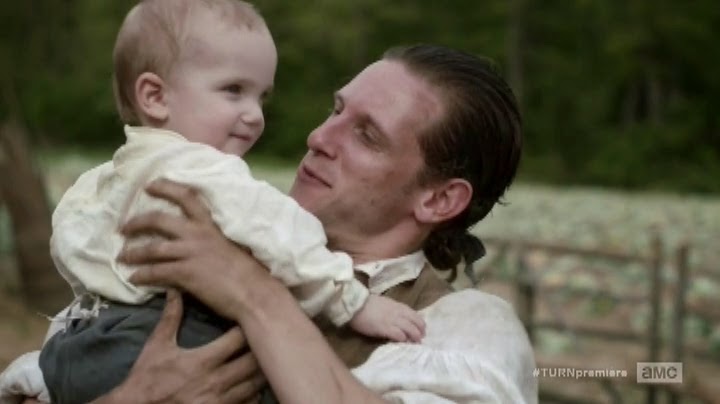
Turn takes us back to the 18th century, the time of the American Revolutionary War; we take a closer look at the life of a farmer, Abe Woodhull, who, like nobody, fits the profile of a lesser man. Lying low, he's growing cabbage, a good part of which ends up infested with worms, so he is not even good at it. Watching the "redcoats" commit all sorts of indiscretions, he keeps being loyal to the crown, like his father - a very influential man, as it turns out. He's married and has a son.


"The normal" life he's trying to maintain is ruined, when he gets into a fight with the British at his ex-sweetheart's tavern. The fight leads to a chain of events which results in Abe becoming a spy for the Continental Army. 

I've read that some people say they like that it's not all black and white, but it is. Sure, Americans use waterboarding to obtain intelligence (nice to know their techniques have not changed since 1776) and kill the enemy in a very cruel manner, but there is not a single moment during the episode, when we would hesitate to say who the real bad guys are. 


Abe is the only character that's got any edge; all others are merely the decorations. I see Turn as a story about a man trying to find the true self and finally get rid of his father's beliefs, he's always thought of as his own. And just like we know the outcome of the Revolutionary War, we know the ending of this story, don't we?

P.S. The intro is awesome, but I can't help feeling it's not right for this series.

Apr 7, 2014

SILICON VALLEY S01E01 REVIEW

Silicon Valley premiered last night on HBO, so I'll write a couple of words about it.

Synopsis:

Richard lives in a Silicon Valley incubator with four other geeks and works for a global tech company Hooli; his own project develops very slowly, until two billionaires, Peter Gregory, who hates college education (I'm with him on that, by the way), and the founder of Hooli, Gavin Belson, find out about the algorithm he wrote that allows to compress files without any data loss. Naturally, they want in, and Richard must decide, which offer he would accept.


In may ways, it's like Better Off Ted meets The It Crowd, only without the awkward romantic relationships (well, at least for now, I definitely sensed the potential love story between the lead and the college-hater assistant) and any normal people. The series portrays the ridiculousness of the tech world, populated with the suddenly rich social freaks, who can't think of spending cash on anything better than a performance by Kid Rock (!) at their party. 

The tech world is divided. On the one side there are billionaires driving exceptionally narrow cars and talking to the spiritual advisers. On the other side - the nobodies, the guys who have gotten the shit kicked out of throughout all their lives, the guys who do not want to change the world, or even get rich, for that matter; they just want to make it happen, without fully realizing what it is.


The acting is exceptional and is essential to the show. Most of the jokes are funny just because of the tone and the facial expressions. And of course, the creators couldn't not introduce the typical American comedy character - the insensitive doctor. Only here, on top of delivering the usual anatomical jokes, the doctor is pitching his patients with his app idea.

The episode ends with Richard's speech about how he doesn't want his company to turn into any other "corporate cult", and that was probably the funniest part of the show. We've seen it all before; the most dramatic example is, of course, Google; the company, famous for fighting "the evil" (i.e. Microsoft), has turned into... well, whatever it is now.

So, whether you love or loathe the tech world, this show is definitely worth checking out.

Feb 9, 2013

HOUSE OF CARDS REVIEW or ARE YOU KIDDING ME, NETFLIX?

THE FOLLOWING REVIEW MAY CONTAIN SPOILERS AND A GREAT DEAL OF RAGE.

There are no words to express my anger and frustration caused by this series, so what I'm about to write may be quite emotional and lacking structure.

Plot: The Majority Whip, Francis (Frank) Underwood (D) (Kevin Spacey), doesn't get the position of Secretary of State, which was promised to him during the campaign, so he focuses on getting even a more senior position in the administration anyway. He has a wife, Claire (Robin Wright), as psychopathic as he is, who's running a non-profit "humanitarian" organisation that helps deliver water to the Third World countries, and a nosy reporter Zoe Barnes (Kate Mara), whom Underwood screws and uses to leak some materials (at times fake) about his opponents.


It's a good thing Netflix released the whole season at once, otherwise there'd be no way I'd watch it all. From the beginning I thought of it as of something lame, banal, with poorly written dialogues and unrealistic situations, but because there aren't many ongoing shows about politics at the moment, it still seemed  watchable. Around the sixth episode it started to annoy me a lot, but since I've already invested so much time into this I've decided to finish it, which wasn't a good decision, apparently, - I was literally furious when the closing credits appeared at the end of the last episode. Do you know what I wanted to see in the finale? Frank Underwood being brutally murdered. The more blood the merrier. Alas, there was just a crappy cliffhanger instead.

Why did I hate it so much? Well, there is a number of reasons, not the least of which is the annoying, unsympathetic main character. I hated  him from the opening scene when he strangled his wounded dog, just like later in the series he killed a useless, broken congressman. What surprised me though, was that it felt like the creators of the series adored Underwood. Otherwise I don't know why he kept winning, even though there were no grounds for that. He kept speaking to the camera (I hated when he did that), saying some pathetic bullshit about his alleged power, but he never felt powerful to me, instead, he felt deluded and thus pathetic. He was capable of dirty tricks, no doubt, but those could have only succeeded if all of his opponents were morons. I mean, seriously, an accusation in writing an anti-Israel editorial in a school newspaper over thirty years ago? A brick in congressman's window? A boy killed at the time of teachers' strike, who "should have been in school"? A leaked education bill? In real life none, ABSOLUTELY NONE of this would have worked the way it did in the series. And every time I desperately wanted Underwood to lose; as I said, I fucking hated that empty, moronic, self-absorbed, cheeky bastard.


The characters in House of Cards are incredibly strange, whatever they do or say (especially say) makes very little to no sense. That is especially true with Claire. Her Louboutin shoes the camera often focuses on explain her character better than her lines or her actions altogether. The relationship between her and Frank is weird, to say the least; I'd understand if they'd never talk to each other when not in public, but instead they seem to have some kind of love while openly cheating on and using each other. She overuses a pronoun "we", she plays with the feelings of a photographer, who's in love with her for some reason, and she acts like a Hitler when at work. Nice.


To emphasize the dirtiness of his character, Frank chooses to eat in a shit hole and spends his free time in a gloomy cellar; worthless Zoe lives like a white trash with rotting food and spiders all around, and the moment she realizes that, her affair with the is doomed. That's when she finally turns into a real reporter, although previously she clearly stood against all the journalistic values heavily promoted in The Newsroom. Sadly, we never get to learn if she buries Underwood before he gets to her. But one thing I know for sure: if there is a season two, I'll stick to reading recaps. I've had enough of watching.

Feb 2, 2013

WHAT'S NEW?

As I already said, most of the new series are rather bad, and this affects very negatively on my will to recap. So I'll just write a short summary of what I think of winter premieres.

Utopia.  Unexpectedly amazing. I'm not a big fan of long episodes, because of my short attention span (they normally lose me after forty five minutes), but it never feels long with Utopia. It is as exciting and mesmerizing as it is delirious, and its best feature is this incredibly bright, colorful, psychedelic picture, which drags you to the madness and ridiculousness of the story.


The Americans. Talking about long episodes. By the end of the pilot I didn't know what to do with myself. And all this time I kept thinking "Do we really need all these flashbacks?", "Do we really need to hear the entire In the Air Tonight?". The story is about two Russian spies, who "pretend" to be an American family from the suburbs. The guy leans toward betraying his motherland (what can you expect from a person with transvestite-ish eyebrows), while the girl stays firm, although I can't stop thinking that if she was a good spy, she'd get rid of him immediately. They are not allowed to say a single word in Russian (but there seems to be nothing wrong with drinking vodka) to avoid the risk of blowing their cover. The pilot rolls around the traitor they had to catch and deal with while not letting the FBI agent from counterintelligence, who moved into the next house, suspect anything. To sum up: if they manage to cut the crap, this series might actually get watchable, as of now it's a little boring and far-fetched.


Banshee. A masculine version of Revenge. If you like fights and don't care for the story to be in any way realistic, Banshee is the right show for you. Tough guys, sex, crime, torture and a much uglier version of Milla Jovovich as the heroine: that's pretty much what this series is about.


House of Cards. Yesterday Netflix released all the thirteen episodes of its first original series and I watched three of those. I recognize it's a big step for Netflix and I'm glad that they are trying to go in that direction, but objectively it's not particularly good. The essence of the story is fine and it's even shot quite OK, but I can't emphasize enough how poorly it's written. Especially the dialogues. They are not even pretentious, they're simply inhuman, people just don't talk like that! Even if they are politicians. And what's the deal with Kevin Spacey's character talking to the camera all the time? It just diminishes the effect of what's going on; when the character interrupts his supposedly emotional speech, which makes people cry (!), to notify us, the viewers, of his real agenda, I stop being inside the story, I'm suddenly above it. To sum up, this series just made me realize how much I miss Boss.(*bursts into tears*).


The Following. I think there's something fundamentally wrong about making the villain of the show more likable than the main protagonist, especially if your story is about a serial killer, who happens to draw inspiration for his murders from the works of Edgar Allan Poe. There's nothing original about how the story is told, and I fail to imagine a person who would like this series.


Cracked. After suffering from PTSD a police officer is forced to work with a psychiatrist, and together they dedicate their lives to catching literally crazy murderers instead of just shooting them, which apparently is the common practice in Canada. Trivial procedural.


1600 Penn. A "comedy" series about how the president of the United States is also human. His smartest daughter had one night stand and is now pregnant, his oldest son is clearly retarded, his trophy wife is self centered and the other two kids are irrelevant. Neither compelling, nor funny.


Deception. Boring Revenge with black people. Nuff said.


Legit. I'm not a fun of Louie (and stand up comedy for that matter) and Jim Jefferies's Legit is even worse. But I'm sure that people that watch it love it.


Way to Go. A Brittish black comedy about three young guys who are quite successful at wasting their lives. The irony of the series is that they start an assisted suicide business to help those terminally ill. It requires adjustment to the accent and it's not that funny (though I had a few laughs).


On a brighter note, Archer is back and it's hilarious!

Jan 2, 2013

RIPPER STREET S01E01: MEH

I don't really enjoy procedurals, so I didn't expect much from the new BBC series Ripper Street, that's why I wasn't exactly disappointed. The series is surely below the average and it's unlikely to gain many fans, but when there's nothing else on TV, it can pass for a time killer.

[Spoilers!]
The first episode is called "I Need Light", although I'd name it "the dawn of porn", since it's almost fully dedicated to pictures and movies of that sort. The story happens in 1889 in Whitechapel, which seemed to look like a district of Mordor at the time. A bunch of non good-looking middle-aged men investigate a murder of a prostitute, which later turns out to be a violinist, whose fairly successful career in the porn industry has been interrupted by a deadly workplace accident. Her employer obviously tried to hide this, so he cut her body so that she'd look like one of the victims of Jack the Ripper. One third of the episode was dedicated to various people speculating if the Ripper is back, but in the end those who were guilty paid for their crime with their lives.

The characters:

Detective Inspector Edmund Reid (Matthew Macfadyen), one of the leads. He wants to hide the murder from the general public until it's known for a fact if it is committed by Jack the Ripper. But he does warn his wife (?) from going out after nightfall, which must mean she was (or is?) a whore.


Here she is, Emily Reid (Amanda Hale). She was introduced very briefly, so there's not much to say about her at themoment. 


Detective Sergeant Bennet Drake (Jerome Flynn), the only lead character that has no connection with prostitutes (or tarts, as they call them in the series) yet. He's good at beating people up; on the picture below he's working undercover to help arrest the guy who organizes rigged bare fist fights.


Captain Homer Jackson (Adam Rothenberg), a surgeon who seemed to have done something very wrong in America, so he run to England to hide. He's the smartest one.


Long Susan (MyAnna Buring) used to be Jackson's lover and came to London with him, owns a whore house. 


Fred Best (David Dawson) the editor of the newspaper Star, the main antagonist of the series, it seems. He's not very fond of Reid and he just wants to publish sensational stories regardless of how unsettling they could be to the people of Whitechapel.


All in all, Ripper Street is brutal, not pleasant to the eye and there are instances of overacting. Plus the episode felt too long and thus boring, it only got somewhat exciting at the very end. I'm unimpressed.

Oct 31, 2012

GAME CHANGE: "ALASKA'S PRETTY TOUGH"

It took me quite some time to watch this movie, and frankly, it had not even been on my list until it got so many Emmy awards. Honestly speaking, I don't like movies in general, especially those over one hour - I have very short attention span. But I love it when political processes are getting publicly dissected, so I actually enjoyed watching this one.

Game Change (HBO) was based on a book of the same title, written by political journalists Mark Halperin and John Heilemann about McCain/Palin campaign of 2008. Both Palin and McCain claimed the book and the movie to be false or inaccurate, though some of the campaign insiders, including chief strategist Steve Schmidt, who was also portrayed in the movie, seemed to believe otherwise.


In short, the movie is about how Palin (played by Julianne Moore) has been chosen as a VP candidate for a very wrong reason and how she managed to gain nation wide popularity without an adequate level of competence or the appropriate manners.

This movie left me with some mixed feelings. In terms of telling a story it was good and overall interesting to watch. Surprisingly, Sarah Palin comes out as a very humanly, almost sympathetic character, despite the fact that Game Change is clearly pro-Democratic. OK, she doesn't know shit about foreign or, for that matter, national politics, but it's not her competence she gets chosen for, is it? McCain's character was, to my shock, even more likable, which I could never say about this person IRL.

 
To the downsides. I like to think of myself as a liberal (well, for the most part that is), but it does not feel right to me that the story is perpetually rolling around Palin's ignorance, whereas, let's say, her dreadful rhetoric, which is still contributing to the country division, is barely even touched (they do talk about it, but I do not think it is thoroughly illustrated).  

I know, it must be extremely difficult to portray some real life person, especially, if this person is still all over TV. Julianne Moore was praised for her performance, but I actually believe Ed Harris did a better job. I swear, at times his gestures and mimics made my brain replace him with the image of real McCain and the makeup people did not even have to yellow his teeth! (That's very low of me to mock someone's physical features, I know, but I'm still very far from becoming Joan Rivers, aren't I?). I did not have these moments with Moore's Palin, it might be because I know the actress very well and can't subconsciously let go of this fact. Or it could be because though it is fairly easy to copy Palin's looks, imitating her gestures, manner of speech, facial expressions - not so much.


And then I did not think it was such a great idea to use the actual footage of Obama/Biden, because it made me even more aware that McCain/Palin are played by actors. The reporters I could take, but making Moore fake debate Biden in no way made it feel real, but I'm sure critics believed otherwise.

Talking about the current US President, the most fascinating idea of the entire movie was that Palin and Obama are fundamentally similar, only one of them is smarter and better educated. The non-achievers, the talkie-talkers with drive and charisma, they gained people's support by simply speaking, and their speeches remained to be their greatest achievements. To understand the mesmerizing effect Obama had on most of the world we just need to remember that he's got the Nobel Peace Prize, and this is not a freaking fiction, this is the fact that we have to live with for the rest of our lives.

Anyway, back to the movie. Although I admit that personalities are properly illustrated there, I regret to say that the things what I watch political movies or shows for are not. Tricks, tactics and techniques, typically used in campaigns like that, are presented very vaguely, and since they are ultimately not working, I have hard time understanding why they could be considered as valid in the first place. The only politically calculated, dubiously moral approach that is given a proper narration is the one that is addressed in Anderson Cooper's question, whether Palin has been chosen for being more appealing to Republican voters, rather than for being actually fit for the role of Vice President of the United States. And maybe the reason behind this choice has not been so boldly obvious to the average voter. But other things like when fair criticism of a candidate by reporters is presented to the public as a politically motivated attack, or when no one spends the money on campaigning in states that are either steady "red" or are more than likely to vote "blue" (vice versa for the Democrats, of course), or the whole practice of releasing pieces of negative information about the opponent - they are neither new nor there is anything in executing them that we wouldn't know. So, in terms of political system overview, this movie did not feel like an insider story, more like an anecdote told by an observer from the outside, who happened to overhear a couple of chitchats, but without any particular details.

Well, how shall I end this piece of writing? I guess, by saying that Game Change is a fine movie. The story, though is not told the way I would prefer it to be, is a compelling one, and whereas I can never know how accurate, if at all, it is, it does give a general idea about the source of the whole Sarah Palin phenomenon. In the end, when McCain gives his concession speech, his adviser Steve Schmidt (Woody Harrelson) has a face expression, when he hears the crowd chanting "Sarah", as if he realizes that he is Dr. Frankenstein; well, he isn't. It's not the political advisers, who made Palin who she is now, they only put some light on her due to their own shortsightedness; the rest of work has been done by her and the people who see themselves in her.


The people of America are facing another presidential election now, and from the other continent it feels that sadly, neither of their options could be the right choice.